
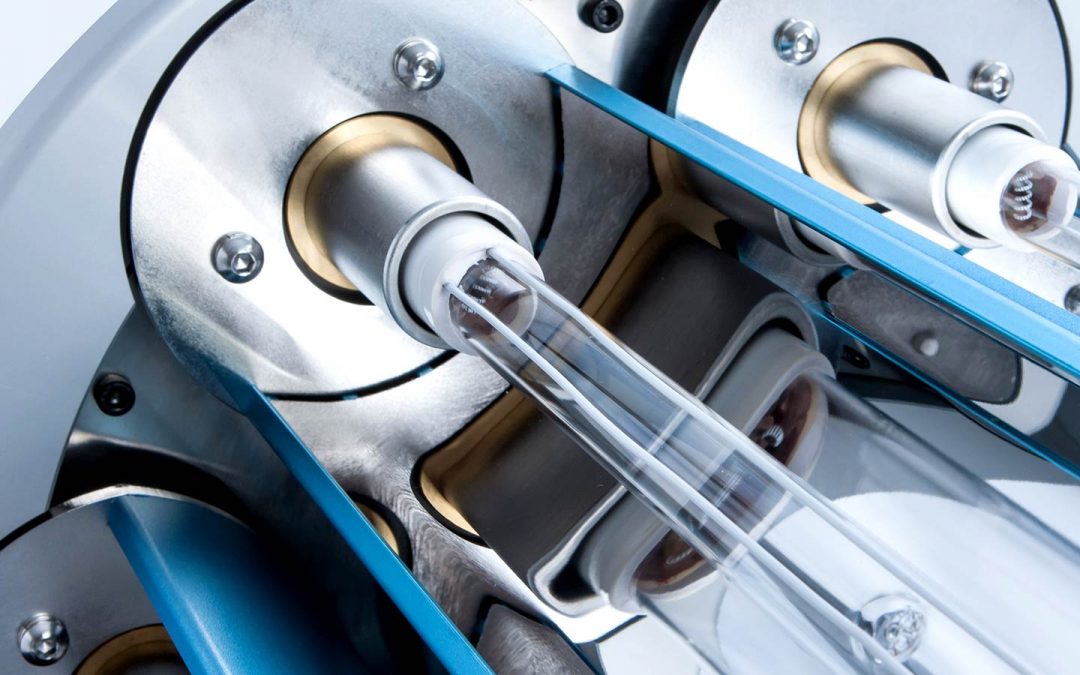
UVC disinfection lighting is a type of germicidal ultraviolet light that is used to kill or inactivate microorganisms by destroying nucleic acids and disrupting their DNA, leaving them unable to perform vital cellular functions. UVC lights are germicidal because they emit UV radiation at shorter wavelengths than UVB or UVA lights, which are ineffective at killing microorganisms. UVC disinfection lighting is used in a variety of settings, including hospitals, laboratories, food processing facilities, and water treatment plants. The most common type of UVC light is the low-pressure mercury vapor lamp, which emits UV radiation at 254 nanometers (nm). Other types of UVC lamps include halogen lamps, xenon lamps, and metal halide lamps. UVC light is effective at killing a wide range of microorganisms, including bacteria, viruses, protozoa, and fungi. It has been used for years to disinfect surfaces and sterilize equipment in hospitals. More recently, UVC lights have been used to disinfect air in HVAC systems and to purify water in both residential and commercial settings. UV light sterilizer is safe for humans when used properly.
The different types of UVC disinfection lighting available
UVC germicidal lamps
UVC germicidal lamps are used in a variety of settings, including hospitals, schools, and office buildings, to disinfect the air and surfaces. These lamps emit ultraviolet (UV) light at a wavelength of 254 nanometers (nm), which is effective at killing bacteria, viruses, and other microorganisms. UVC germicidal lamps are safe to use around people and animals when used as directed.
UV C sanitizing lights
UV-C sanitizing lights are a type of technology that uses ultraviolet light to clean surfaces and kill germs. UV-C light is a short-wavelength, ultraviolet radiation that is harmful to microorganisms. When used as a sanitizing light, UV-C energy penetrates the cell walls of bacteria and viruses, causing damage to their DNA. This damage prevents the microorganisms from reproducing and leads to their death. UV-C sanitizing lights are effective against a wide variety of bacteria, viruses, and other microorganisms, including: • Escherichia coli (E. Coli)• Salmonella enteric• Staphylococcus aureus (staph)• Streptococcus pneumonia (strep) In addition to being an effective cleaning tool, UV-C sanitizing lights can also help reduce the spread of illness by killing the germs that cause respiratory infections, such as influenza (the flu) and tuberculosis (TB).
Ultraviolet germicidal irradiation
Ultraviolet germicidal irradiation (UGGI) is a disinfection method that uses short-wavelength ultraviolet (UV-C) light to kill or inactivate microorganisms by destroying nucleic acids and disrupting their DNA, leaving them unable to perform vital cellular functions. UGGI is used in a variety of applications, such as food, air, and water purification. The UV spectrum can be divided into four categories: UV-A, UV-B, UV-C, and Vacuum-UV. Of these, UV-C is the most effective at germicidal activity because it has the shortest wavelength and highest energy level. Germicidal lamps that emit UV-C light are used in hospitals, laboratories, pharmaceutical manufacturing facilities, food processing plants, and water treatment facilities. When properly applied, UGGI systems are highly effective at inactivating bacteria, viruses, molds, and other microorganisms. In order for forum light to be effective at disinfection, it must come into direct contact with the microorganism; shadows created by objects can shield microorganisms from the ultraviolet rays and prevent inactivation.
The benefits of using UVC disinfection lighting in healthcare settings
PRECISION MEDITECH is a company that draws on excellence to provide solutions that enhance the ability for caregivers to effectively fulfill their duties. Our goal is to build a high-performing medical equipment supplier company that gives healthcare providers the tools they need to achieve better outcomes.Don’t hesitate to contact us now!
